
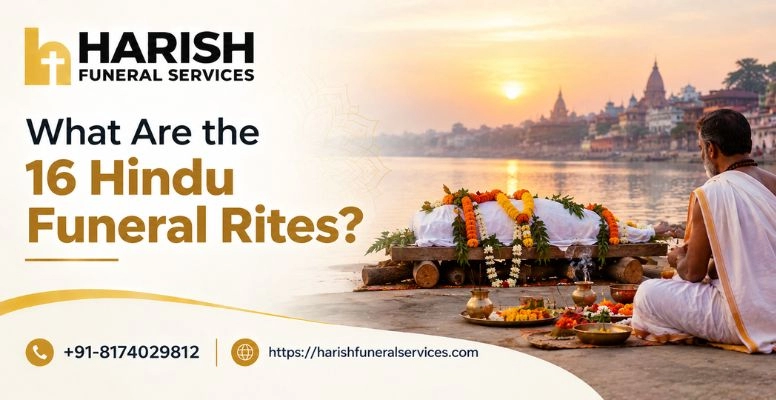
Every family that loses a loved one wants to perform the final rites correctly, following tradition and respecting the beliefs passed down through generations. In Hindu dharma, these final rites are known as Antyeshti or Antim Sanskar, and they are considered the last of the sixteen sacred sanskars performed across a person's life journey. Harish Funeral Services has supported many families across Lucknow in carrying out these rites properly, with the right guidance, priest arrangement and practical support at every stage. This guide explains the sixteen Hindu funeral rites in a simple, step-by-step manner, so families understand what each stage involves and why it holds importance in Hindu tradition.
Before going into the sixteen steps, it helps to understand where this term comes from. In Hindu tradition, a person's life is marked by sixteen important sanskars, or sacred rites of passage, starting from birth and continuing through major life stages such as naming, education, marriage and finally death. The last of these sixteen sanskars is called Antyeshti, meaning the final sacrifice or final rite.
This is why the funeral process itself is often broken down into a set of sixteen individual rituals, performed in sequence from the time of death until the final ceremonies that mark the end of the mourning period. These rituals are not just formalities; they are believed to guide the soul on its journey after death and offer peace to both the departed and the grieving family.
It is worth mentioning that the exact sequence and number of rituals can vary slightly depending on region, community and family tradition. What follows is the commonly followed sequence recognised across most Hindu households in North India, including Lucknow and nearby areas.
Here is a quick overview of the sixteen rites in the order they are typically performed.
| Step | Ritual Name | When It Happens |
|
1 |
Preparing the Body |
Immediately after death |
|
2 |
Placing the Body Facing South |
Before the final journey begins |
|
3 |
Tilak and Sacred Marking |
During body preparation |
|
4 |
Reciting Mantras and Scriptures |
Before the procession starts |
|
5 |
Antim Darshan |
Last viewing by family and friends |
|
6 |
Antim Yatra |
Funeral procession to the cremation ground |
|
7 |
Arrival at the Cremation Ground |
Placing the body on the pyre |
|
8 |
Parikrama of the Pyre |
Circling the body before lighting the fire |
|
9 |
Mukhagni |
Lighting the funeral pyre |
|
10 |
Kapal Kriya |
Symbolic ritual during cremation |
|
11 |
Completion of Cremation |
Fire allowed to complete its process |
|
12 |
Asthi Sanchayan |
Collecting the ashes, usually the third day |
|
13 |
Asthi Visarjan |
Immersing ashes in a river or holy water |
|
14 |
Shraddha Rituals |
Daily rituals during the mourning period |
|
15 |
Pind Daan |
Offering rice balls for the departed soul |
|
16 |
Terahvin or Uthala |
Final ceremony marking the end of mourning |
Each of these steps is explained in more detail below, along with its significance in Hindu belief.
As soon as death occurs, the body is prepared with care and respect. This involves:
This step is done by close family members, often with guidance from a priest, and marks the beginning of the funeral process.
According to Hindu belief, the direction south is associated with Yama, the deity of death. The body is placed with the head pointing toward the south as a mark of respect toward this belief, symbolising the soul's onward journey.
A tilak, usually made from sandalwood paste or holy ash, is applied on the forehead of the deceased. This is considered a mark of blessing and spiritual protection as the soul begins its final journey.
Before the body is taken for cremation, a priest usually recites mantras and verses, often from sacred texts such as the Garuda Purana or the Bhagavad Gita. These recitations are believed to guide the soul and offer it peace during this transition.
Antim Darshan refers to the final viewing of the deceased by family members, relatives and friends before the body is taken away. This is an emotional moment where people pay their last respects.
The Antim Yatra is the funeral procession where the body is carried from the home or hospital to the cremation ground. Traditionally, family members and friends walk alongside, often chanting religious phrases as a mark of respect.
Once the procession reaches the cremation ghat, the body is placed on a prepared wooden pyre or, in the case of electric cremation, moved to the designated area following the same basic ritual sequence before entering the chamber.
Before lighting the fire, a close family member, usually the chief mourner, circles the pyre a set number of times. This act, known as parikrama, is performed with reverence and is considered an important part of the ritual sequence.
Mukhagni is one of the most significant moments in the entire funeral process. The chief mourner, generally the eldest son, lights the funeral pyre while reciting sacred verses. This act symbolises the release of the soul from the physical body and is considered a solemn duty within the family.
During the cremation process, a ritual known as Kapal Kriya is sometimes performed, where the chief mourner gently touches or taps the skull area with a bamboo stick as the fire progresses. This is believed to help release the soul completely from the body.
The cremation process is allowed to complete naturally in the case of a traditional wood pyre, or through the designated cycle in electric cremation. Family members typically wait nearby until this stage is finished.
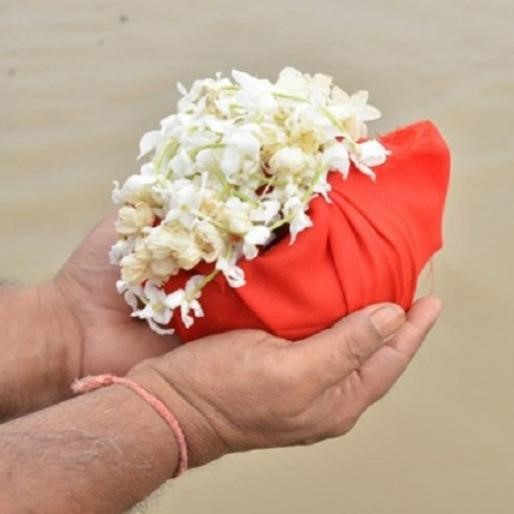
Usually on the third day after the cremation, family members return to the cremation ground to collect the remaining ashes and bone fragments. This process is known as Asthi Sanchayan and is done with careful respect.
The collected ashes are then taken to a river or another body of holy water for immersion. This step, called Asthi Visarjan, is believed to help the soul move closer to liberation, and many families choose specific holy rivers for this purpose.
Between the day of cremation and the thirteenth day, a series of daily rituals known as Shraddha are performed. These rituals typically involve offering food, water and prayers in honour of the departed soul, and they continue through the mourning period.
Pind Daan involves offering small rice balls, known as pindas, to the departed soul as part of the Shraddha rituals. This offering is believed to nourish the soul during its journey and is usually performed by the chief mourner under a priest's guidance.
The final ceremony, known as Terahvin, takes place on the thirteenth day after death, though some communities also observe a shorter version called Uthala on the fourth day. This ceremony marks the formal end of the mourning period, and family members often perform a community feast or prayer gathering as part of this closing ritual.
For Hindu families, these sixteen rites are not just customs passed down over generations; they carry spiritual meaning tied to the belief in the soul's journey after death. Some key reasons these rituals matter include:
Understanding the purpose behind each step often brings comfort to families, since they feel they are honouring their loved one in the way tradition intends.
While the sixteen steps described above are widely followed, some variation exists based on region, community and family custom. A few points to note:
Families unsure about which version of the ritual sequence to follow can consult a family priest or a funeral service familiar with local customs.
Performing all sixteen rites correctly, within the right timeframe and with proper guidance, can feel overwhelming for a grieving family. Harish Funeral Services assists with:
Our goal is to help families complete each ritual with the respect it deserves, without worrying about missing a step or arranging things at the last minute.
Families across Lucknow trust Harish Funeral Services not only for logistics but also for clear, honest guidance on ritual matters. Here is what we offer:
Our team works alongside the family at every stage, so the sixteen rites are performed properly and with the peace of mind every family deserves during this time.
If your family needs guidance or support in performing the sixteen Hindu funeral rites, from body preparation to the final Terahvin ceremony, please reach out to us at +91-8174029812. Our team can arrange priests, ritual samagri, transport and complete coordination, so you can focus on honouring your loved one properly.
Harish Funeral Services stands with families across Lucknow during such moments, offering complete support so every ritual is performed with the respect, care and tradition it deserves.
The traditional 16 rites are more accurately called the 16 Hindu Samskaras or Shodasha Samskaras. They mark important stages of life, beginning with conception and ending with Antyeshti, the final funeral or cremation rite.
A commonly followed list includes Garbhadhana, Pumsavana, Simantonnayana, Jatakarma, Namakarana, Nishkramana, Annaprashana, Chudakarana, Karnavedha, Vidyarambha, Upanayana, Vedarambha, Samavartana, Vivaha, Vanaprastha and Antyeshti. Different Hindu traditions may use slightly different lists.
Antyeshti Sanskar is the final samskara associated with death and funeral rites. The term refers to the last rite or final offering. Depending on family and regional traditions, it may include preparation of the body, funeral procession, cremation and rituals performed afterward.
Hindu last rites can include bathing and dressing the deceased, placing the body on a bier, taking it to the cremation ground, performing prayers and rituals, and conducting cremation. The exact procedure varies according to family tradition, community and religious practice.
Traditionally, a close family member known as the karta performs the principal funeral rituals. In many families this may be the eldest son, although practices differ between communities and families. A priest may guide the family through the required prayers and ceremonies.
Cremation is a major traditional form of Hindu funeral practice, but funeral customs are not identical across all Hindu communities. Certain traditions and circumstances may follow burial or other practices. Families should follow their community customs and guidance from their religious authorities.
Mukhagni refers to the ceremonial lighting of the funeral pyre during Antyeshti. Traditionally, the chief mourner performs this important part of the cremation ceremony. The exact procedure, prayers and responsibilities can differ according to regional and family traditions.
After cremation, families may collect the remaining bones and ashes, known as asthi, followed by Asthi Visarjan or immersion according to their traditions. Families may also perform Shraddha and other remembrance rituals on specified days.
The period and sequence of rituals after death vary considerably between Hindu communities and families. Some traditions observe ceremonies over several days, including rituals on the 10th, 11th, 12th or 13th day, while later Shraddha ceremonies may also be performed.
Yes, Harish Funeral Services can assist families with funeral transportation and related arrangements in Lucknow. For assistance with dead body transportation or funeral-service requirements, contact +91-8174029812 and share the pickup location, destination and required services.