This guide walks you through everything you need to know about the cremation process at Manikarnika Ghat — from its spiritual meaning to the practical steps involved — so that you can perform your loved one's final journey with dignity and peace of mind. Losing a loved one is one of the hardest moments in life, and when the last rites need to be performed at Manikarnika Ghat in Varanasi, families often feel overwhelmed by the rituals, the logistics, and the emotional weight of the moment.
At Harish Funeral Services, we help families across India arrange every part of this process, from transporting the body to Varanasi, to booking priests, wood, and cremation slots at the ghat. You can reach us anytime at +91-8174029812 for immediate assistance.
Manikarnika Ghat is the oldest and most sacred cremation ground in Varanasi, situated on the banks of the river Ganga. It is considered the holiest place in Hinduism for performing the last rites, because Hindus believe that a soul cremated here attains moksha — liberation from the endless cycle of birth and death.
The ghat gets its name from a popular legend. It is believed that Lord Shiva's earring (called manikarnika) fell here, making the spot eternally sacred. Another legend says that Goddess Parvati hid her earrings near this ghat, and since then, it is believed that Lord Shiva personally oversees every cremation performed here, guiding the soul toward liberation.
Unlike an ordinary crematorium, Manikarnika Ghat has been used continuously for cremation for centuries. The sacred fire here is said to never go out, and cremations take place round the clock, every single day of the year.
Many Hindu families travel from different parts of India, and even from abroad, to cremate their loved ones here. Some of the common reasons include:
Every cremation at Manikarnika Ghat follows a set sequence of religious and practical steps. Here is a simple breakdown of the entire process.
If the death has occurred outside Varanasi, the first step is transporting the body. This can be done by:
Harish Funeral Services can arrange safe and respectful transportation of the deceased to Varanasi from anywhere in India, along with all the required paperwork.
Before cremation can be arranged, certain documents must be ready. Keeping these prepared in advance avoids delay:
| Document | Purpose |
|
Death certificate |
Mandatory proof of death, issued by hospital or municipal authority |
|
Hospital discharge summary (if applicable) |
Required in case of hospital death |
|
Identity proof of the deceased |
Aadhaar card, voter ID, or any government ID |
|
Identity proof of the family member/next of kin |
For booking the cremation slot |
|
Police NOC (only in unnatural death cases) |
Required if the death was accidental, unnatural, or under investigation |
Our team at Harish Funeral Services can guide you on exactly which documents are needed for your specific case and help you complete the paperwork without unnecessary running around.
Once the body reaches Manikarnika Ghat, it is carried by family members or trained helpers, usually on a bamboo stretcher, wrapped in a plain white or saffron cloth. Traditionally, this task was performed by a community known as the Doms, who have managed the sacred fire and cremation duties at this ghat for generations.
The rituals at this stage typically include:
Wood is central to the cremation ritual at Manikarnika Ghat. The quantity required depends on the body weight but is usually between 300 to 400 kilograms for an adult.
| Wood Type | Common Use | Approximate Price Range |
|
Regular firewood |
Used for the base of the pyre |
Moderately priced, sold by weight |
|
Sandalwood (chandan) |
Added on top for fragrance and purity, used in smaller quantities |
Significantly higher priced per kilogram |
|
Ghee (clarified butter) |
Poured over the pyre to help it burn evenly |
Sold separately by weight |
|
Additional ritual items |
Cotton wicks, camphor, incense, mango leaves |
Sold as a small ritual kit |
Exact prices change frequently based on market rates and are best confirmed on the day of the ceremony. Harish Funeral Services can handle this purchase directly so families are not overcharged and do not need to negotiate at a stressful time.
The purchased wood is arranged into a pyre by the ghat workers. The body, wrapped in cloth, is placed on top of the arranged wood, generally with the head positioned toward the north or as guided by the family priest, following traditional Vedic direction.
Additional wood and a small amount of sandalwood are placed over the body, and ghee is poured on top to help the fire spread evenly.
This is the most significant moment of the entire ceremony. The eldest son or closest male relative (referred to as the chief mourner or karta) performs the Mukhagni, which means lighting the pyre, usually near the mouth of the deceased.
Before lighting the pyre, the chief mourner typically:
The eternal flame used at Manikarnika Ghat is believed to have been burning continuously for centuries and is considered extremely sacred.
Once lit, the cremation at Manikarnika Ghat itself generally takes two to three hours, depending on the wood quantity, weather conditions, and body weight. During this time:
At a certain point during the cremation, a ritual called Kapal Kriya is performed, where the chief mourner gently strikes the skull of the burning body with a bamboo stick. This is believed to release the soul from the physical body completely. This step is guided closely by the priest present.
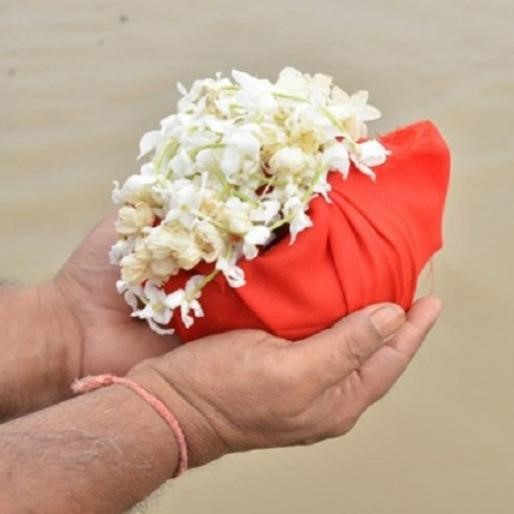
After the cremation is complete and the fire has cooled, the remaining bones and ashes are collected. This is usually done a day or a few hours after the cremation, depending on family customs. The ashes are gathered into a small urn or cloth pouch.
The final step is immersing the collected ashes into the river Ganga, known as Asthi Visarjan. This is considered essential to complete the funeral rites and is usually performed:
Some families also choose to travel to other significant pilgrimage sites, such as Haridwar or Prayagraj, for the final immersion, based on family tradition.
Hindu funeral rites do not end with cremation. A series of rituals follow over the next several days, which families often continue at home or with the guidance of a priest:
Harish Funeral Services can also help coordinate priests for these follow-up rituals, whether in Varanasi or in your hometown.
Several people play a role in completing the ceremony smoothly:
| Role | Responsibility |
|
Doms (ghat workers) |
Manage the eternal fire, arrange wood, and assist with the physical cremation process |
|
Priest (Purohit) |
Guides the family through mantras, timing, and correct ritual sequence |
|
Chief mourner (usually eldest son) |
Performs Mukhagni and leads the core rituals |
|
Family members |
Support the process, arrange documentation, and participate in prayers |
Costs can vary depending on wood quantity, priest fees, and additional services required. Below is a general idea of what families typically budget for:
| Expense Head | What It Covers? |
|
Wood (regular + sandalwood) |
Base and premium wood for the pyre |
|
Ghee, cotton, camphor, and ritual items |
Items needed to light and maintain the pyre |
|
Priest fees |
Guidance through mantras and rituals |
|
Ghat labour charges |
Assistance from ghat workers during cremation |
|
Transportation (if applicable) |
Ambulance or hearse service to bring the body to Varanasi |
|
Accommodation for family (if applicable) |
Stay arrangements for out-of-town families |
Because prices fluctuate and depend on individual requirements, it is best to speak directly with our team for an accurate, transparent estimate before you travel. Call Harish Funeral Services and we will explain every cost clearly, with no hidden charges.
Arranging a cremation at Manikarnika Ghat without local support can be difficult, especially during an emotionally difficult time. Some common challenges include:
This is exactly where a professional funeral service becomes valuable, taking the operational burden off the family so they can focus on grieving and honouring their loved one.
At Harish Funeral Services, we specialise in making this difficult journey smoother for families across India. Our services include:
We understand that every family follows slightly different customs based on region, caste, and personal beliefs. Our team is trained to accommodate these variations respectfully, ensuring the ceremony reflects your family's wishes.
Performing the last rites at Manikarnika Ghat is one of the most sacred acts in Hindu tradition, offering a family the comfort of knowing their loved one's soul is on the path to liberation. While the spiritual significance is profound, the practical side of arranging transportation, documentation, wood, and rituals can feel overwhelming, especially while grieving.
Harish Funeral Services exists to carry that practical burden for you, with respect, transparency, and care at every step. Whether you need help with a single ritual or complete end-to-end funeral arrangements in Varanasi, our team is available to assist you.
For immediate support, call Harish Funeral Services at +91-8174029812. We are here to help your family honour your loved one's final journey with the dignity it deserves.
Families coming from another city can arrange transportation of the deceased, funeral materials, priest assistance, and other last-rites requirements before reaching Varanasi. A local funeral service can coordinate the process and provide ground support.
There is no single fixed cost for every cremation. Expenses can depend on the quantity and type of wood, priest services, transportation, ritual materials, and additional arrangements. Families should ask for a clear cost estimate before making arrangements.
Manikarnika Ghat is a working cremation ground where cremations traditionally take place day and night. However, families should confirm current arrangements and local conditions before travelling, especially during unusual weather or flooding.
Yes, families can seek assistance for funeral arrangements, including transportation, cremation materials, priest services, and post-cremation rituals. Professional funeral services can help coordinate these arrangements during a difficult time. Harish Funeral Services can be contacted at +91-8174029812 for assistance with funeral arrangements in Varanasi.
After the cremation is completed, the family collects the ashes and remaining bone fragments, known as asthi. Many Hindu families then perform Asthi Visarjan by immersing them in the Ganga as part of the final rites.
Before cremation, the family may perform Antyeshti rituals with the guidance of a priest. These can include bathing the body, offering prayers, placing the body on the pyre, circumambulation, and Mukhagni according to family tradition.
The cremation time can vary depending on the body, wood used, weather, and other circumstances. Traditional wooden cremation commonly takes several hours, after which the remaining ashes and bone fragments are collected.
Mukhagni, meaning lighting the funeral pyre, is traditionally performed by the chief mourner. In many families this is the eldest son, but customs may allow a daughter, spouse, relative, or another designated person to perform it.
A wooden pyre is prepared using suitable firewood according to the family's customs and requirements. The body is placed on the pyre, and the priest guides the family through the required rituals before cremation begins.
The deceased is brought to Manikarnika Ghat, usually wrapped in cloth and carried on a bier. The body is ritually washed with Ganga water, placed on a wooden pyre, and final rites are performed before the pyre is lit.